
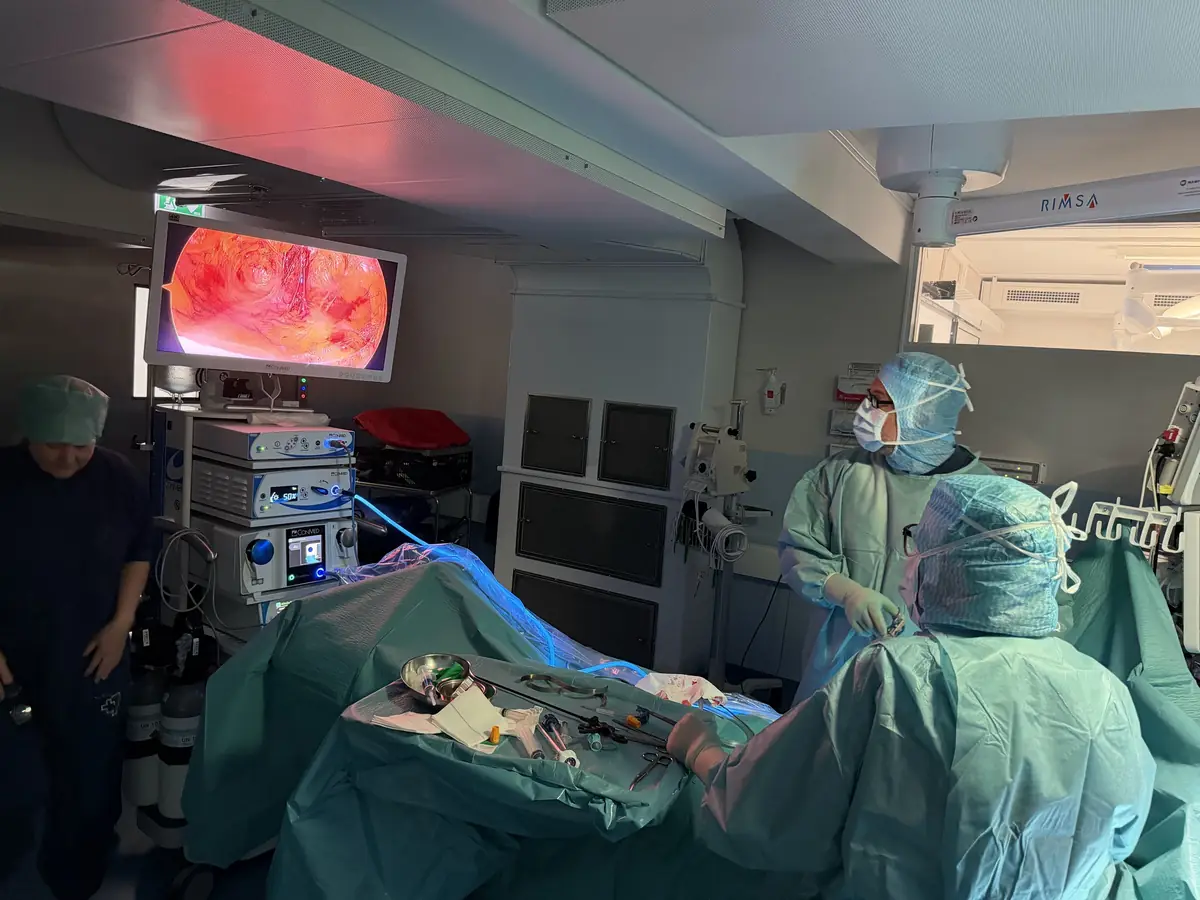
In short
Incisional hernias may appear months or years after abdominal surgery. They can cause a bulge, heaviness, pain and impaired function. Size, location, previous surgery and risk factors determine whether and how repair should be performed.
Seek emergency care if the hernia suddenly becomes hard, severely painful and irreducible, particularly with nausea or vomiting.
What happens at the examination
We examine the entire abdominal wall and review previous operations. CT imaging is often needed for larger, unclear or recurrent hernias.
- Defect location and size
- Assessment of previous mesh
- Coexisting rectus diastasis
- Open or minimally invasive options
Treatment options
The most suitable treatment is decided after an individual medical assessment.
After treatment
Recovery depends on the size of the hernia and method used. You receive an individual plan for wound care, mobilisation, loading and follow-up.
Related conditions
Frequently asked questions
Why do incisional hernias develop?
A previous incision may heal with reduced strength. Infection, smoking, obesity, diabetes and high strain can affect risk.
Do all incisional hernias need surgery?
No. Symptoms, size, growth, emergency risk and operative risk are considered together.
Is CT imaging needed?
Often for larger, recurrent or difficult-to-assess hernias because it shows the defect, muscles and previous mesh.
Can an incisional hernia recur?
Yes. Recurrence varies with complexity, tissue quality, method and patient-related risk factors.
Can rectus diastasis be treated at the same time?
In selected cases, the hernia and diastasis are planned as one abdominal wall reconstruction.
Which mesh position is best?
There is no single solution for everyone. Position is selected according to defect, previous surgery, tissues and reconstructive goals.
Can old mesh be removed?
Only for clear reasons such as infection, pain or reconstructive necessity. This is assessed individually.
How can I prepare for surgery?
Smoking cessation, good glucose control, nutrition, activity and sometimes weight loss can reduce risk.
Medically reviewed by Dr Elias Tsiolis, specialist in general surgery, senior consultantUpdated 2026-10-25This text does not replace an individual assessment.