
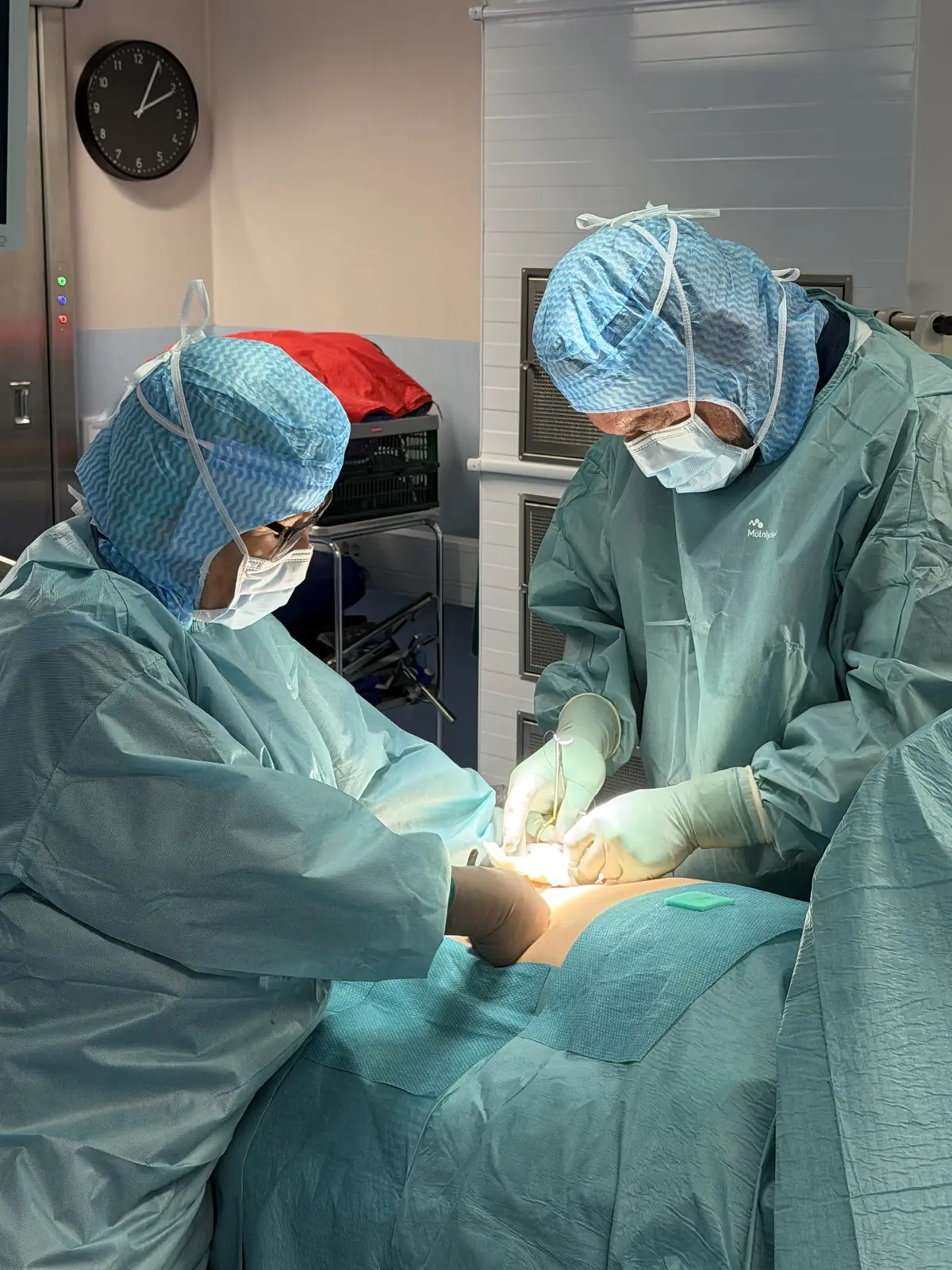
In short
Skin lesions include moles, skin tags, sebaceous cysts and other superficial changes. Many are benign, but new or clearly changing pigmented lesions may need assessment through a different care pathway before planned surgery.
Seek prompt medical care for a rapidly growing or heavily bleeding lesion. Pigmented lesions that clearly change shape, colour or size should be assessed without unnecessary delay.
Read about your condition
What happens at the examination
The surgeon assesses the lesion's appearance, size, depth and location, and asks how long it has been present and whether it has changed.
- Assessment of whether surgery is appropriate
- Planning the incision and scar
- Information about local anaesthesia
- Decision on tissue analysis
Treatment options
The most suitable treatment is decided after an individual medical assessment.
After treatment
The wound is covered with a dressing and you receive instructions on showering, activity and suture removal. Scars mature over several months. If tissue is sent for analysis, we explain how you will receive the result.
Frequently asked questions
Can you remove every mole?
No. A medical assessment comes first. Suspicious pigmented lesions may need to be managed through a dedicated care pathway.
Will there be a scar?
Yes. Any surgery through the skin leaves a scar. We plan the incision to achieve the most discreet result the circumstances allow.
Is local anaesthesia used?
Most minor skin procedures are performed under local anaesthesia.
Is the lesion sent for analysis?
This depends on the type of lesion and the medical assessment. An additional charge may apply according to the price list.
Medically reviewed by Dr Elias Tsiolis, specialist in general surgery, senior consultantUpdated 2026-10-25This text does not replace an individual assessment.