
In short
An inguinal hernia develops when abdominal contents push through a weakened area of the abdominal wall in the groin. The lump often becomes more prominent when you stand, cough or strain and may reduce when you lie down. A hernia does not heal by itself, but not every hernia requires immediate surgery.
Seek emergency care if the hernia suddenly becomes very painful, hard or cannot be pushed back — especially if you also have nausea, vomiting or a swollen abdomen.
What happens at the examination
The diagnosis can usually be made from your history and a clinical examination while standing and lying down. Imaging is mainly used when the findings are unclear or another cause is suspected.
- Examination of both groins
- Assessment during coughing and straining
- Checking whether the hernia can be reduced
- Choice of surgical method when needed
Treatment options
The most suitable treatment is decided after an individual medical assessment.
After treatment
Most patients go home the same day. Early everyday movement is encouraged, while heavier loading is increased according to pain and individual advice. Bruising, swelling and tightness are common initially.
Related conditions
Frequently asked questions
Do all inguinal hernias require surgery?
No. The severity of symptoms, the characteristics of the hernia and your health determine whether and when surgery is recommended.
Can the hernia heal by itself?
No. In adults, the defect does not close spontaneously, although symptoms may vary over time.
Do I need an ultrasound?
Usually not when the examination is clear. Imaging may be appropriate if the diagnosis remains uncertain.
What is the difference between open and keyhole repair?
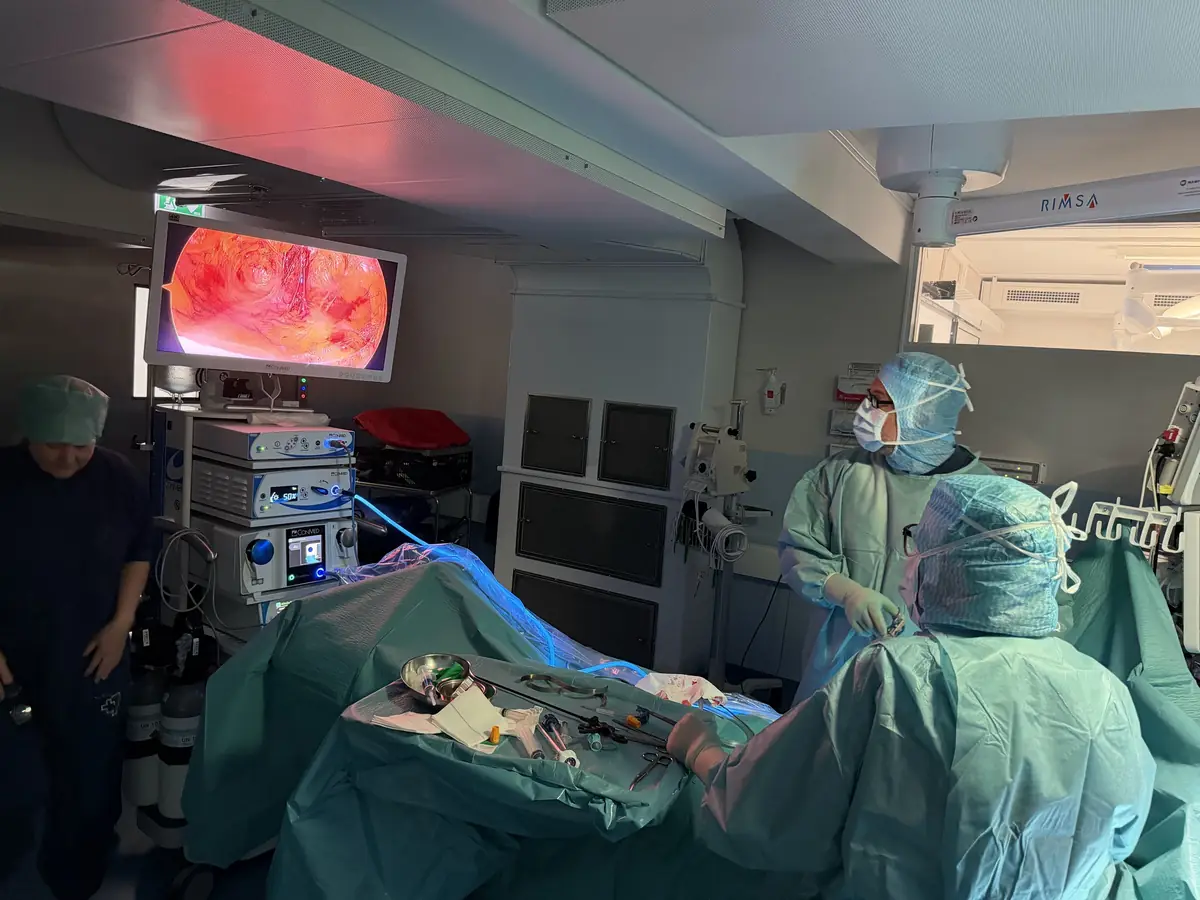
Open repair uses an incision in the groin. Keyhole repair places mesh from behind the abdominal wall. The choice depends on hernia type, side, recurrence and patient factors.
Do you perform laparoscopic surgery?
Yes, when it is medically appropriate. The method is selected individually.
Can bilateral hernias be repaired?
Yes. Both sides are assessed together, and minimally invasive surgery may be particularly suitable in selected cases.
Can a repaired hernia recur?
Yes. Recurrence risk is influenced by the method, anatomy, tissue quality and risk factors.
Can you repair a recurrent inguinal hernia?
Yes, after reviewing the previous method and mesh position. A different anatomical approach is often selected for revision.
Is mesh always used?
Mesh reinforcement is standard for most adult inguinal hernia repairs, but the decision is individual.
When can I drive and work?
When you can move safely, react quickly and are not taking medication that impairs driving. Return to work depends on pain and job demands.
When can I return to exercise?
Walking and light activity can usually begin early. Heavier exercise is increased gradually according to the advice you receive after surgery.
Medically reviewed by Dr Elias Tsiolis, specialist in general surgery, senior consultantUpdated 2026-10-25This text does not replace an individual assessment.