
In short
Pilonidal disease usually develops in the cleft between the buttocks when hair and skin debris contribute to inflammation and sinus formation. It can cause an acute abscess or recurrent small openings with discharge.
Seek prompt care for rapidly increasing pain, fever, spreading redness or a tense, tender swelling.
Gentle laser surgery
Laser treatment with the Leonardo laser
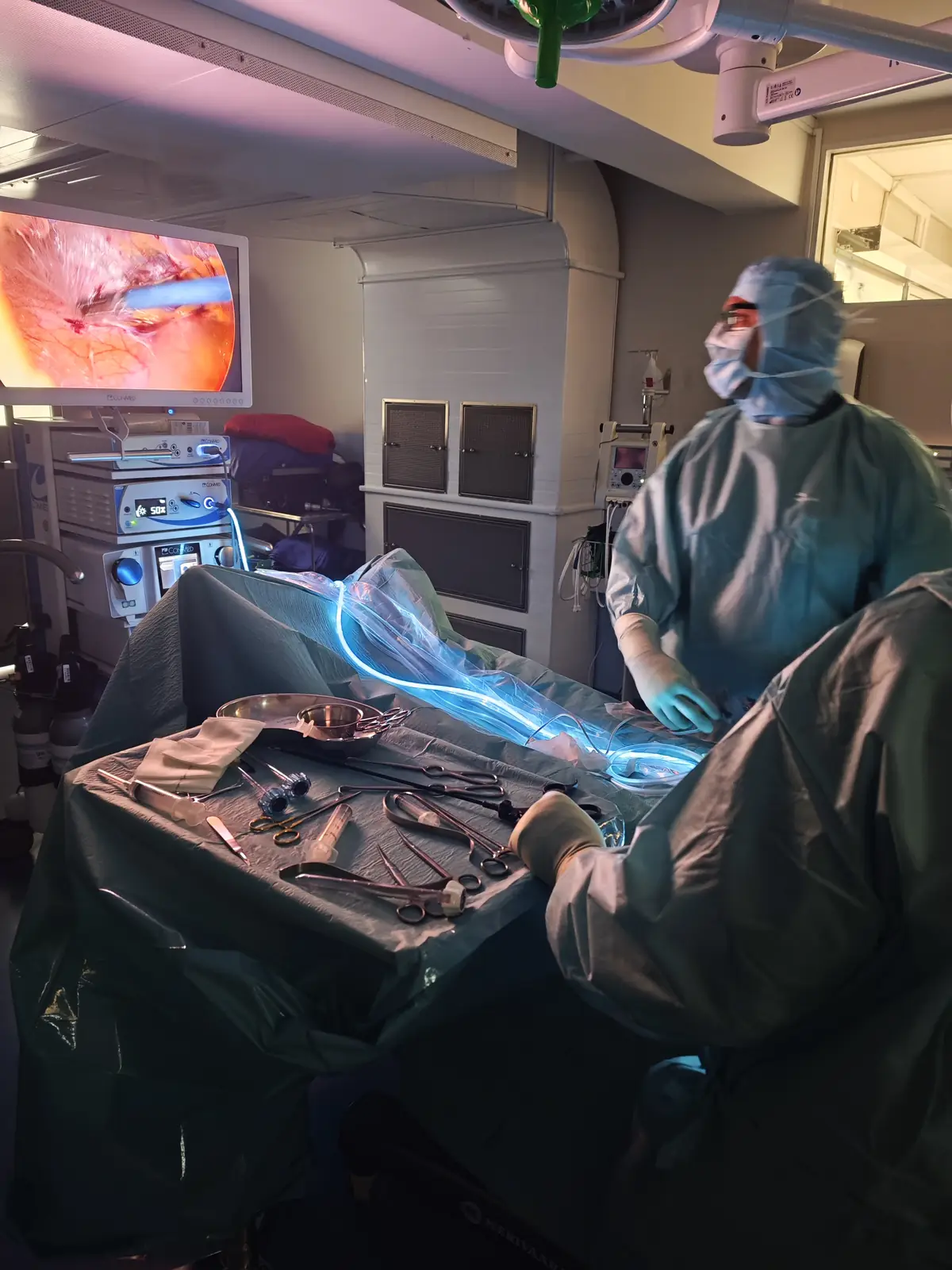
We treat haemorrhoids (LHP), anal fistulas (FiLaC) and pilonidal cysts (SiLaC) with a diode laser. The laser works from the inside through a thin fibre, with small wounds and usually a faster recovery.
What happens at the examination
We examine the area, check for an acute abscess and map openings and sinus tracts. Treatment is tailored according to whether the disease is acute or recurrent.
- Assessment of acute infection
- Mapping openings and tracts
- Review of previous episodes
- Planning the appropriate surgery
Treatment options
The most suitable treatment is decided after an individual medical assessment.
After treatment
Wound care varies with the surgical method. You receive clear instructions on dressings, showering, activity and follow-up.
Frequently asked questions
Is a pilonidal cyst a rectal condition?
No. It affects the skin and tissue near the tailbone, usually above the anus.
How do I know if it is infected?
Rapidly increasing pain, redness, warmth, swelling, pus and sometimes fever suggest infection or an abscess and require prompt assessment.
Are antibiotics required?
Antibiotics do not replace drainage of an abscess but may be needed in selected cases.
Do all pilonidal cysts need surgery?
No. A small opening without symptoms does not always require treatment. Recurrent discharge, infection or marked symptoms may justify planned surgery.
How is an acute abscess treated?
A tense, painful abscess is usually opened so pus can drain. Definitive treatment of sinus tracts can be planned after the infection has settled.
How do I care for the wound after surgery?
Wound care depends on the surgical method. You receive instructions on showering, dressings, activity and any help needed with wound care.
Can hair removal reduce recurrence?
Hair control may be part of aftercare for selected patients. The method and timing should be adapted to the skin and wound healing.
Can it return?
Yes. Recurrence can occur even after surgery, and aftercare is important.
Medically reviewed by Dr Elias Tsiolis, specialist in general surgery, senior consultantUpdated 2026-10-25This text does not replace an individual assessment.